
There is nothing quite like dropping the needle on a record and hearing music the way it was meant to sound — warm, full, and alive. But that experience starts with one decision: the turntable.
Walk into the world of vinyl and you'll quickly find hundreds of options, endless jargon, and strong opinions everywhere. Belt drive or direct drive? Manual or automatic? Do you really need a built-in preamp? It's easy to feel overwhelmed before you've played a single song.
This guide cuts through the noise. Whether you're buying your first turntable or upgrading an old one, we'll walk through everything that actually matters — so you can choose with confidence and start listening sooner.
Why Choosing the Right Turntable Matters
A turntable is the heart of your vinyl setup. Unlike digital players, it physically reads the grooves of a record, which means the quality of every component — from the motor to the needle — directly shapes what you hear.
A good turntable brings out the warmth, clarity, and depth that make vinyl special. A poor one can muddy your sound, wear down your records faster, and leave you wondering what all the fuss is about.
But here's the key: the most expensive turntable isn't automatically the right one. The best choice is the one that matches your listening habits, your space, and your budget. Let's break down how to find it.
1. Belt Drive vs. Direct Drive
One of the first decisions you'll face is the drive type — how the platter spins.
- Belt-drive turntables use an elastic belt to turn the platter, which isolates the motor and reduces vibration. This usually means cleaner sound, making them the favorite for home listeners focused on audio quality.
- Direct-drive turntables connect the motor directly to the platter, offering faster start-up, consistent speed, and durability. They're preferred by DJs and anyone who wants to handle the record actively.
For most people setting up a listening space at home, a belt-drive model is the natural choice.
2. Manual, Semi-Automatic, or Automatic
Turntables differ in how much they do for you:
- Manual — you lift the tonearm, place it, and lift it again at the end. Enthusiasts love the ritual and the control.
- Semi-automatic — you start the record yourself, but the arm returns automatically when it finishes.
- Automatic — press a button and everything happens for you. Ideal for beginners who just want to relax and listen.
There's no wrong answer here — it comes down to how hands-on you want to be.
3. Cartridge and Stylus Quality
The cartridge and stylus (the needle) are where the music actually gets read, so they have an outsized effect on sound.
Higher-quality cartridges deliver more detail and treat your records more gently, reducing wear over time. Some turntables come with a solid cartridge pre-installed; others let you upgrade later as your ears — and your collection — grow.
If sound quality is a priority, pay close attention to the cartridge. It's often a better upgrade than spending more on the turntable body itself.
4. Build Quality and Materials
A well-built turntable does one crucial thing: it controls vibration. Any unwanted movement reaches the needle and shows up as distortion or rumble in your music.
Look for a solid, heavy plinth (the base), a sturdy tonearm, and quality construction throughout. Heavier, well-engineered turntables generally sound better and last longer.
This is also why what your turntable sits on matters just as much as the turntable itself — but more on that in a moment.
5. Built-In Features to Consider
Modern turntables often include extras that add convenience:
- Built-in preamp — lets you connect directly to powered speakers without a separate phono stage. Great for simple setups.
- USB connectivity — allows you to digitize your records to your computer.
- Bluetooth output — connects wirelessly to speakers and headphones.
These features are genuinely useful, but make sure they don't come at the cost of core sound quality. A turntable's main job is still to play records beautifully.
6. Matching Your Turntable to Your Space
Here's the step most beginners overlook — and it's one of the most important.
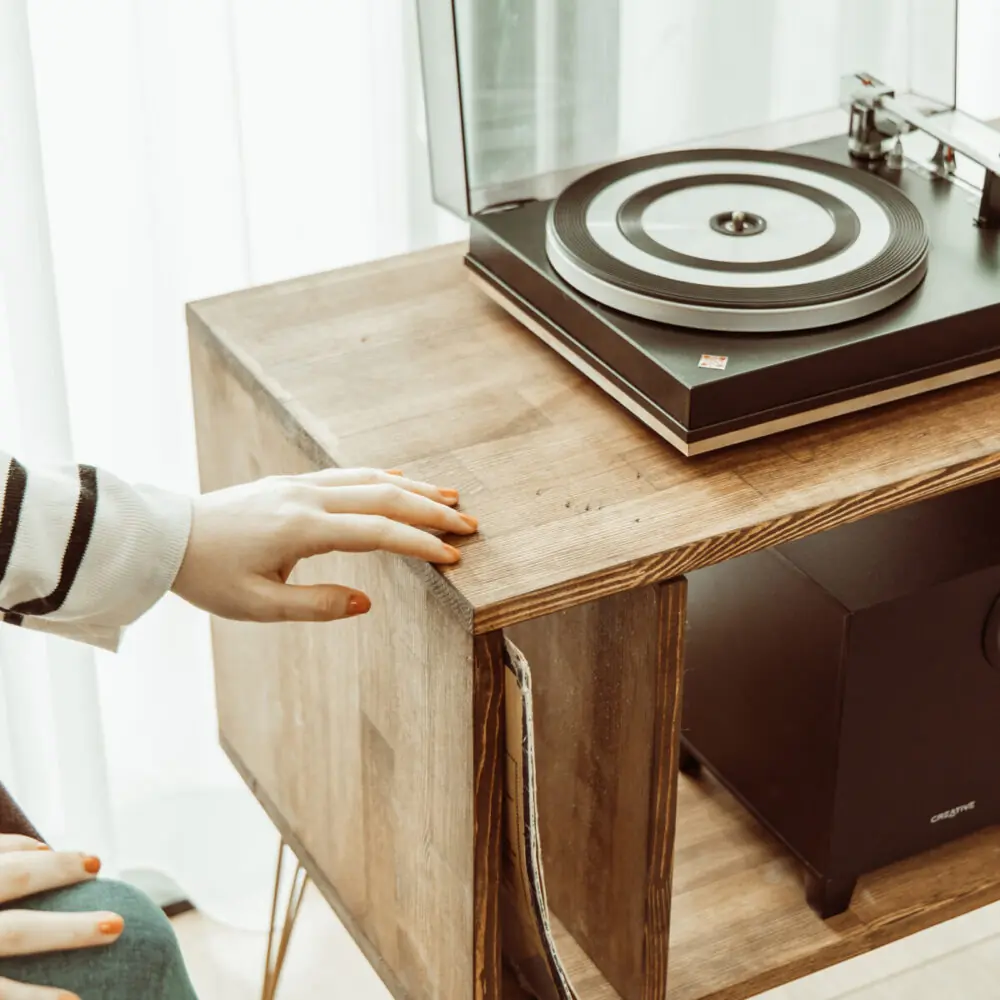
Your turntable needs a stable, vibration-free surface to perform at its best. Placing it on a flimsy shelf, a wobbly table, or a hollow cabinet undoes much of the quality you paid for. Footsteps, bass from your speakers, and everyday movement all travel into the needle and degrade your sound.
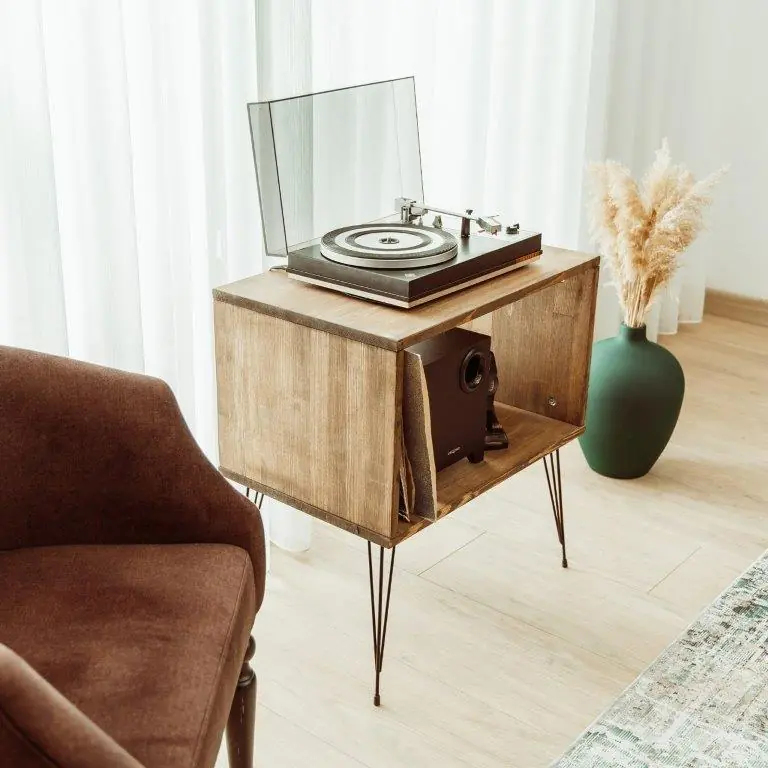
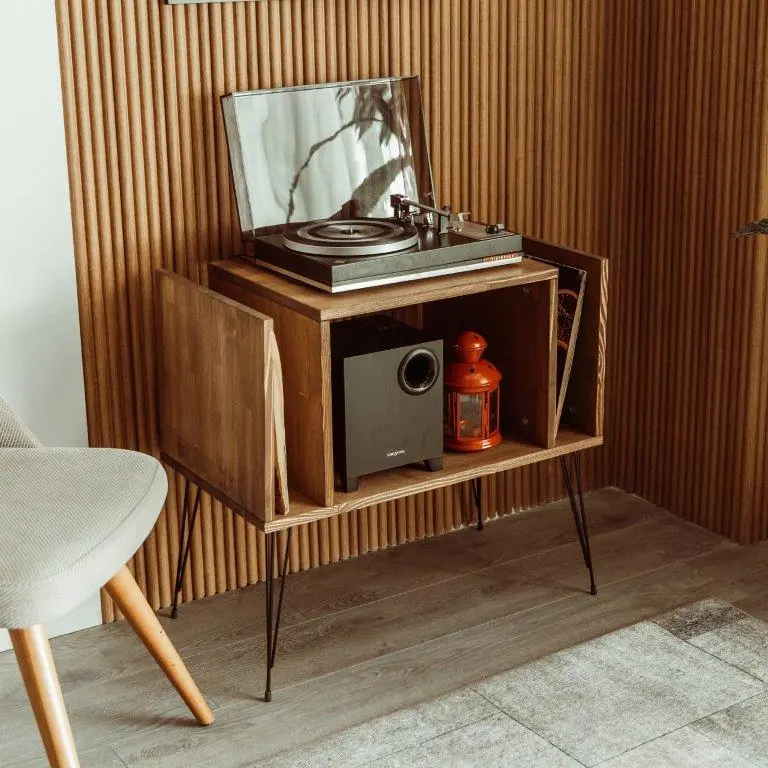
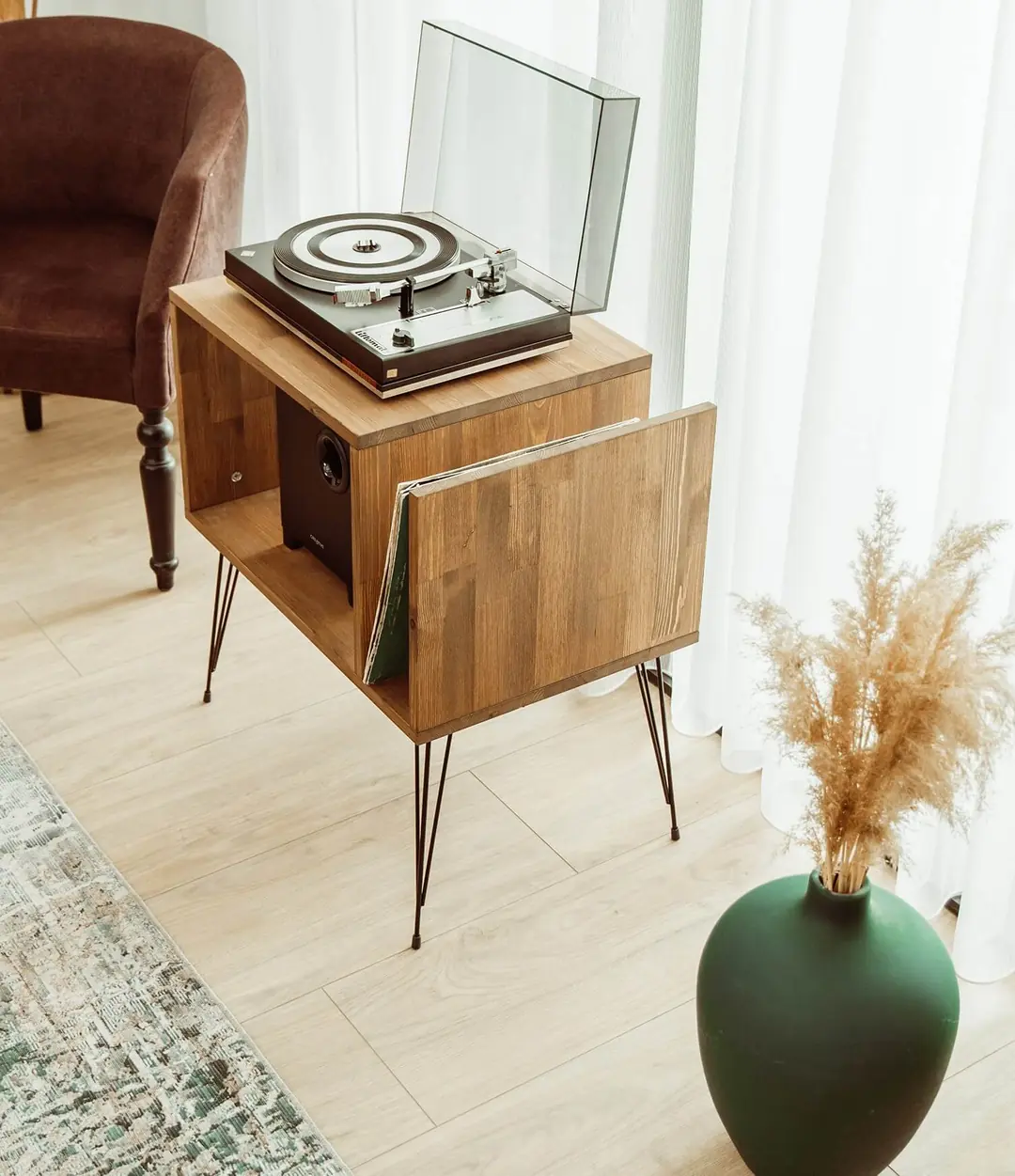
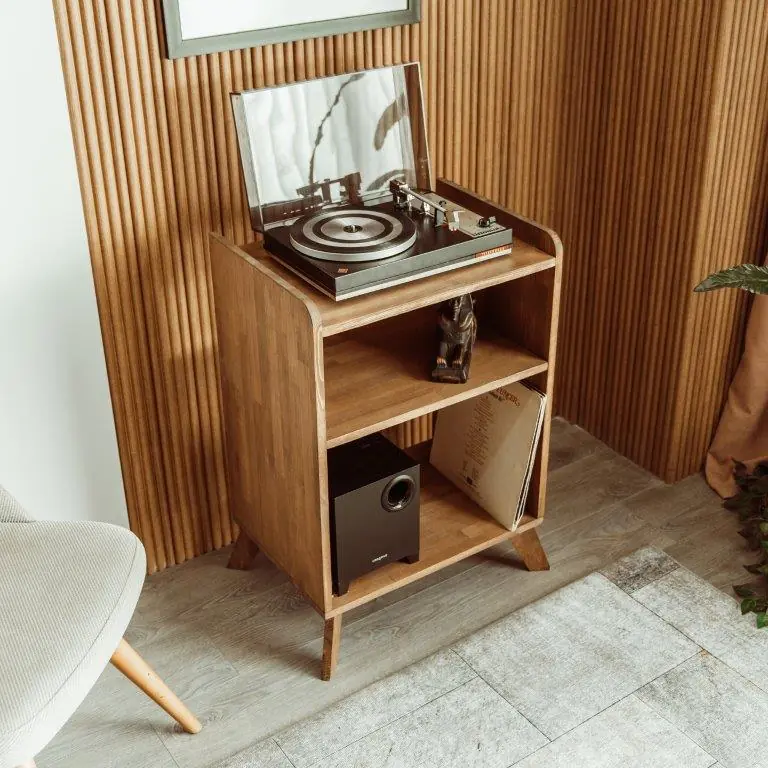
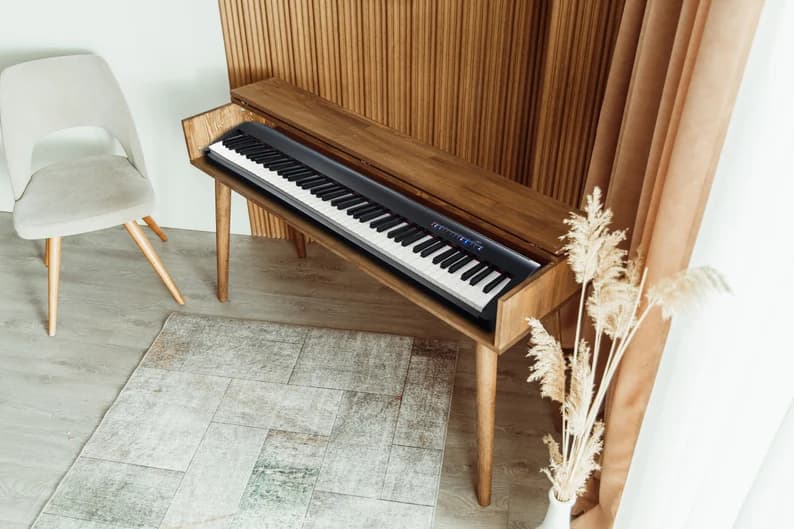
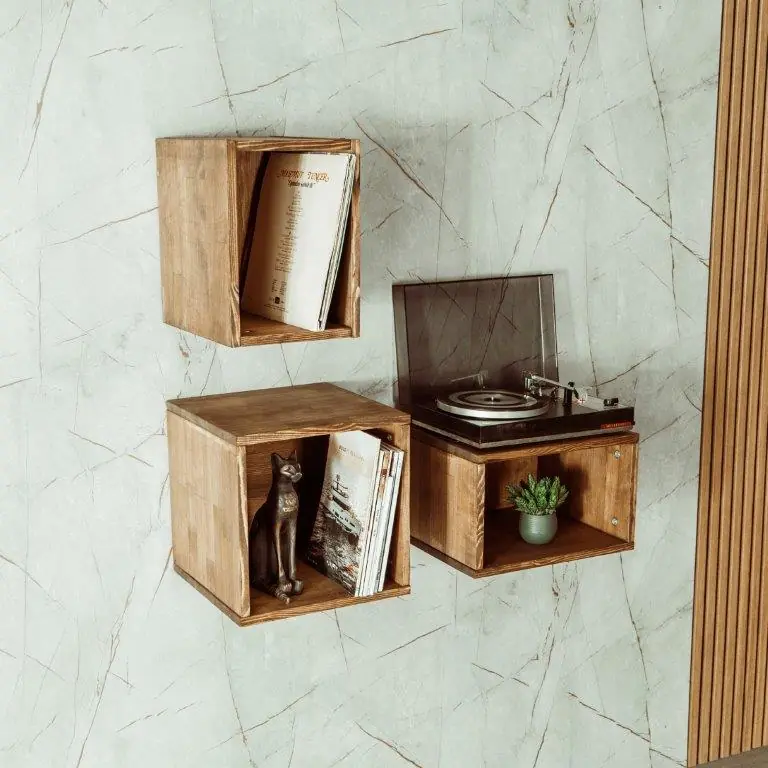
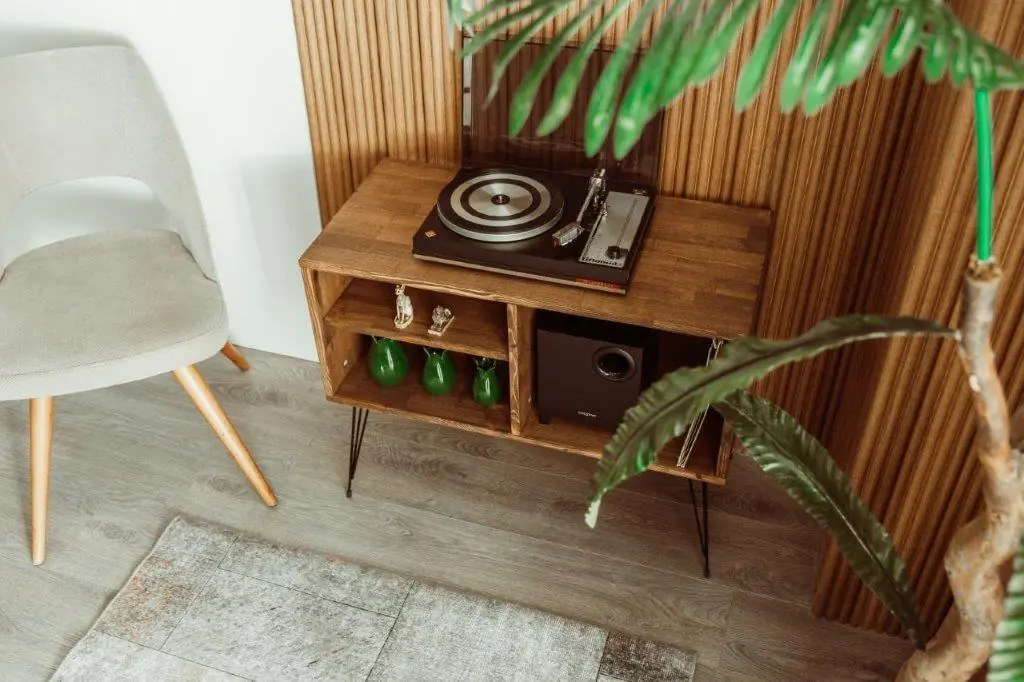
A dedicated record player stand solves this. A solid, well-built stand absorbs vibration, keeps your setup level, and gives your vinyl collection a proper home. It also turns your turntable into a centerpiece rather than clutter on a side table.
At Oshoom, every stand is handmade from solid pine wood — naturally dense enough to dampen vibration, with reinforced legs and felt pads to keep floor noise out of your music. If you want a compact option with enclosed storage, the Griffin Record Player Stand & Cabinet is a great starting point. For a mid-century look with open vinyl storage, take a look at the Tengu MCM Record Player Stand With Storage or the Simurgh Record Player Stand With Storage.
The right stand doesn't just hold your turntable — it protects your investment and elevates the whole experience.
Beginner vs. Enthusiast Turntables
Not sure how far to go? A quick way to think about it:
- Beginners benefit from simplicity and reliability — an automatic or semi-automatic belt-drive turntable with a decent pre-installed cartridge and built-in preamp will sound great and be easy to live with.
- Enthusiasts often prefer manual models with upgrade paths — better cartridges, external preamps, and isolation accessories that squeeze out every bit of quality.
Knowing your level helps you avoid both overspending and under-buying.
Caring for Your Turntable and Records
A little care goes a long way toward preserving sound and extending the life of your gear:
- Clean the stylus gently and regularly
- Handle records by the edges and store them upright
- Keep your turntable level and on a stable surface
- Use a dust cover when you're not playing
- Keep everything out of direct sunlight and away from heat
Good habits protect both your turntable and your growing vinyl collection.
Final Thoughts
Choosing the perfect turntable comes down to balance — sound quality, ease of use, build, and how well it fits your space and budget. Get the fundamentals right and you'll have a setup that brings vinyl to life for years to come.
And remember: a great turntable deserves a great foundation. Once you've chosen yours, give it the stable, beautiful home it deserves. Explore the full Record Player Stand collection and complete your setup the right way.






© 2026 OSHOOM. All rights reserved.