
Small Space, Big Sound: Vinyl Setup Ideas for Apartments and Tight Rooms
You don't need a dedicated listening room to enjoy records. Some of the best vinyl setups live in studio apartments, rented bedrooms, and the corner of a living room that does three other jobs. The trick isn't more space — it's choosing pieces that earn their footprint and arranging them so the room feels open instead of crammed.
If you've been holding off on a proper turntable setup because you "don't have the room," this guide is for you. Here's how to build a vinyl space that sounds great and looks intentional, even when square footage is tight.
Start With the Footprint, Not the Furniture
The most common mistake in a small space is buying a piece you love and then trying to make it fit. Reverse it. Measure the spot you actually have — the wall gap, the corner, the space beside the sofa — and let that number decide what you buy.
A turntable itself only needs about 40–45 cm of width. What you really need is a stand that matches your space rather than dominates it. In a tight room, a compact, vertical piece almost always beats a long, low console. Going up instead of out keeps your floor visible, and a visible floor is what makes a small room read as open.
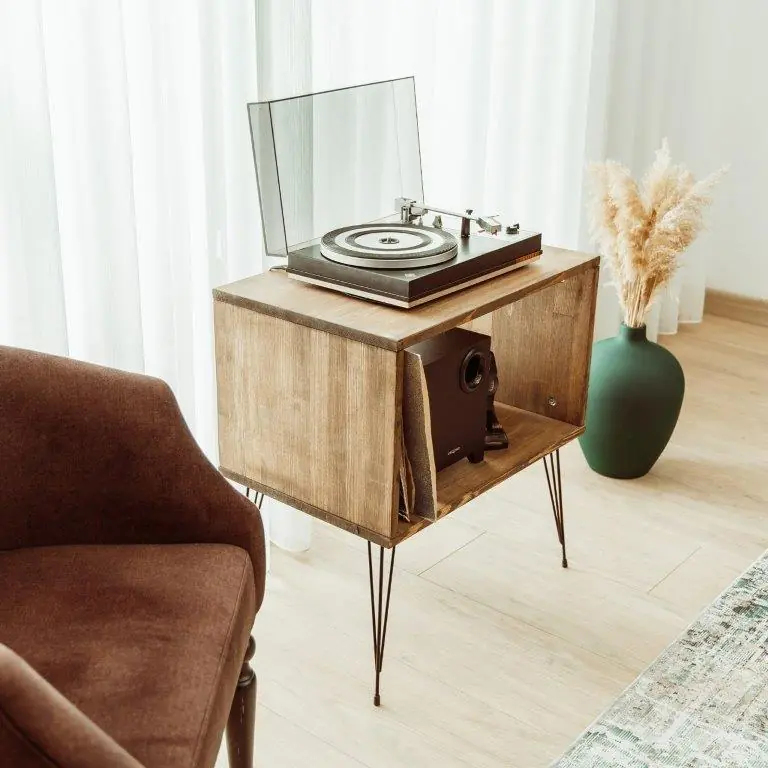
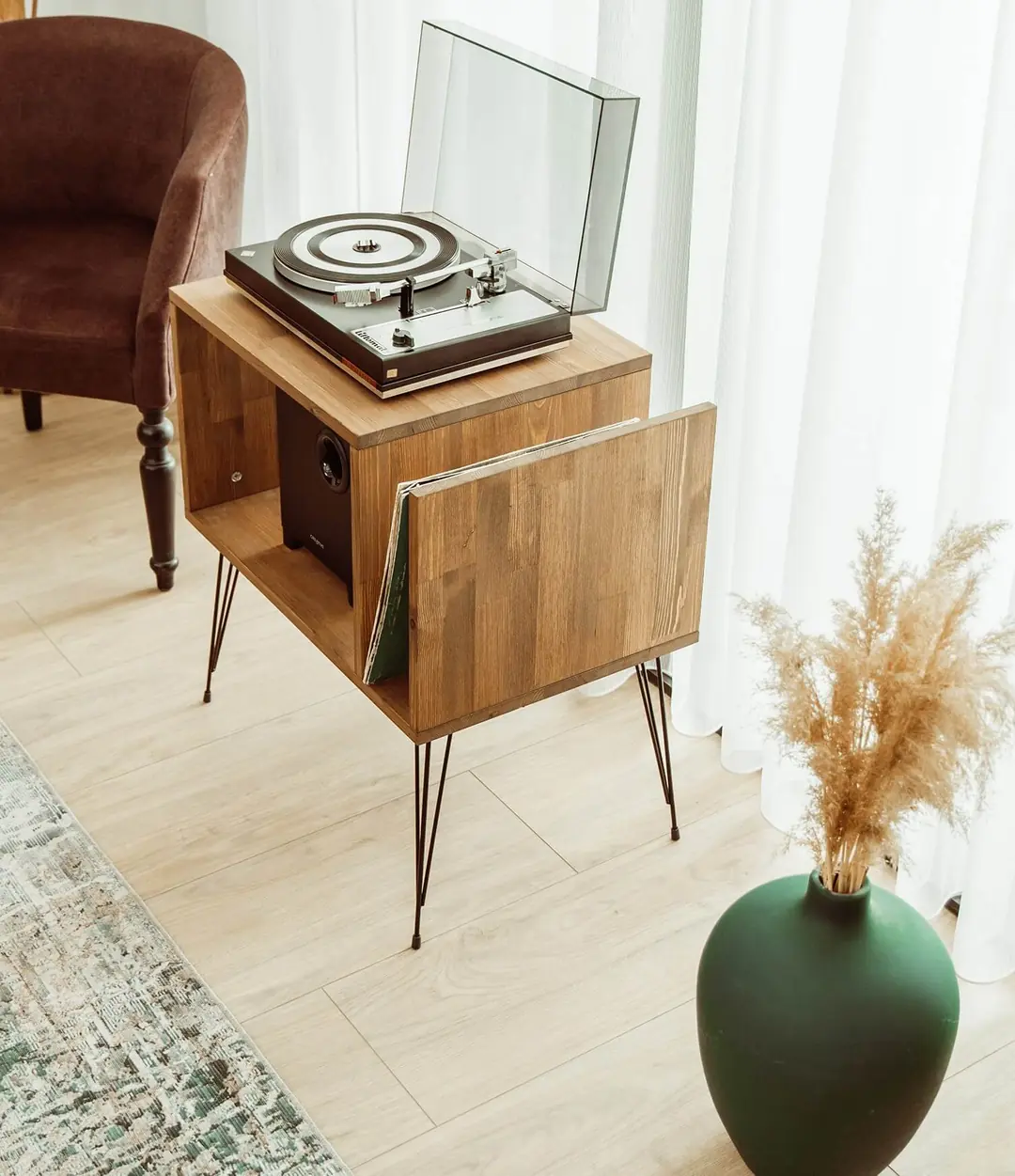
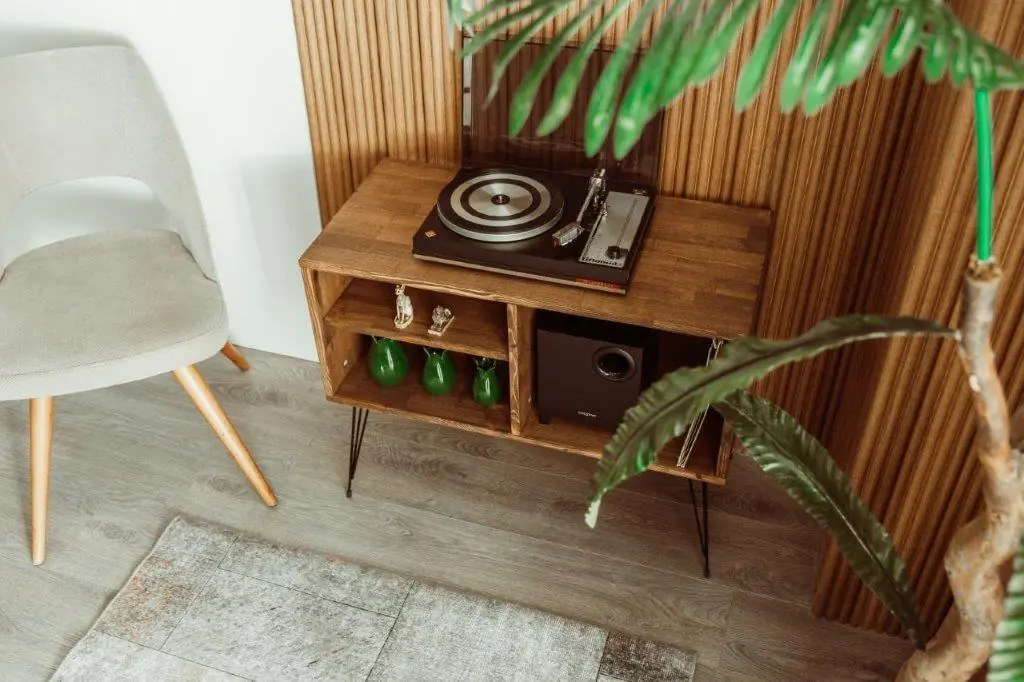
A piece like the Tengu compact record player stand is built exactly for this — a small footprint, an upright slot that holds records on their edge instead of sprawling sideways, and tall hairpin legs that keep everything light.
The Magic of Legs: Why Raised Furniture Feels Bigger
Here's a designer trick that costs nothing and changes everything: furniture on legs makes a room feel larger.
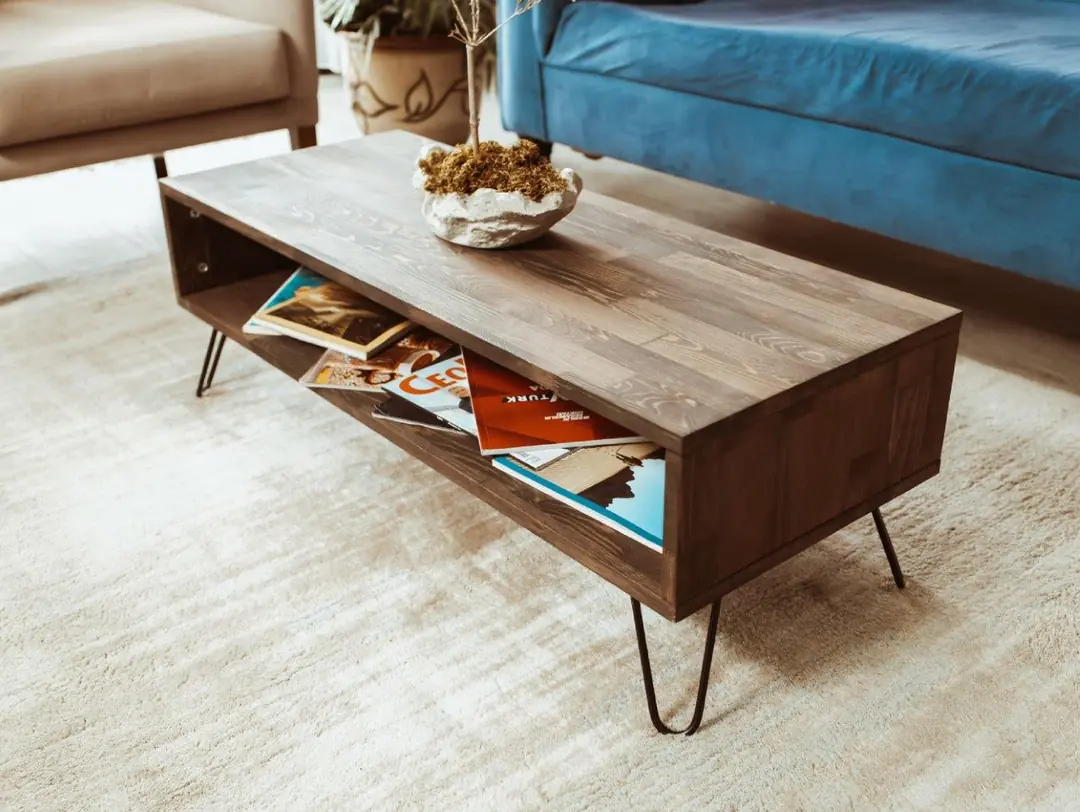
When a piece sits flat on the floor, it reads as a solid block and visually eats the space it occupies. Lift that same piece onto slim legs — especially thin hairpin legs — and suddenly light and floor show underneath it. Your eye reads the continuous floor as more room, even though the furniture takes up the same spot.
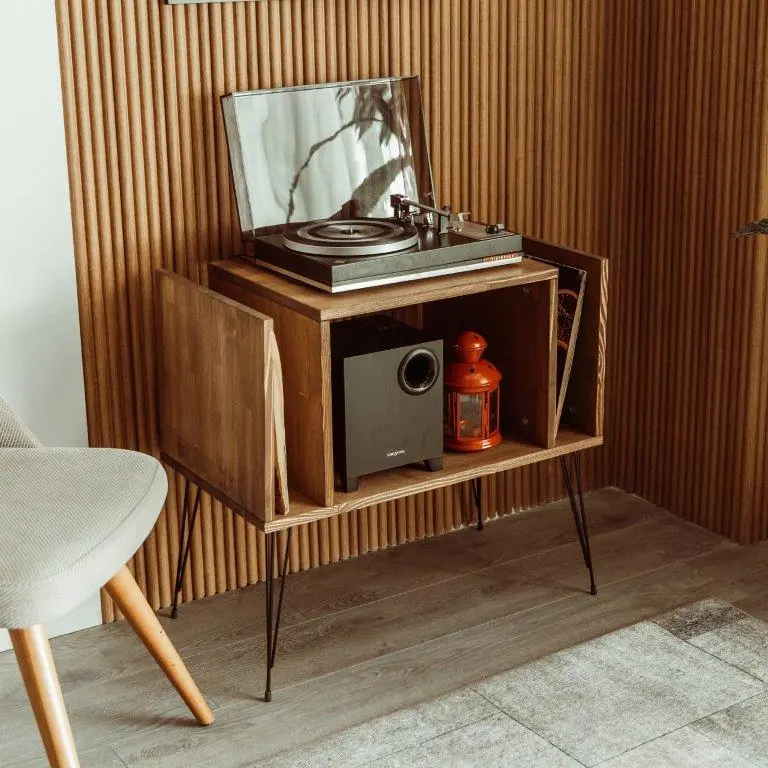
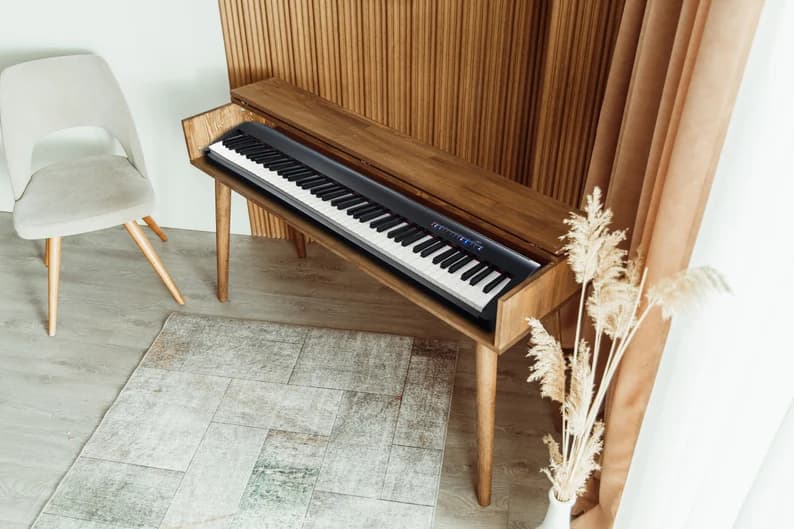
This is why mid-century pieces work so well in apartments. The raised, leggy silhouette was designed for exactly this feeling of openness. Across the Oshoom record player stand collection, the hairpin-leg designs aren't just a style choice — in a small room, they're a space-saving one.
Use Your Corners (They're Wasted Space)
Most small rooms have a dead corner doing nothing. Corners are the single most underused real estate in an apartment, and they're perfect for a setup that needs to stay out of the main traffic path.
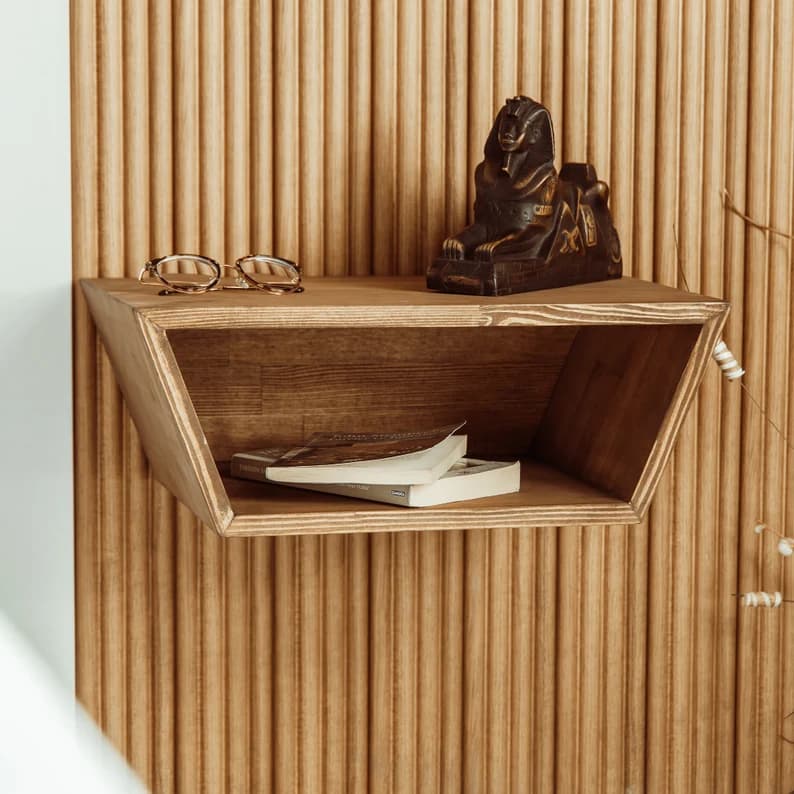
A corner keeps your turntable away from doorways and walkways, so nothing gets bumped while a record is spinning. It also naturally tucks cables and a speaker out of sight. And the same corner logic works for the area around your bed: a wall-mounted floating corner nightstand like the Thoth frees up the entire floor beneath it — ideal when there's no room for a traditional bedside table next to a turntable nook.
Go Vertical: Storage That Climbs the Wall
In a small space, every record you store on the floor is floor you've lost. The fix is to think vertically.
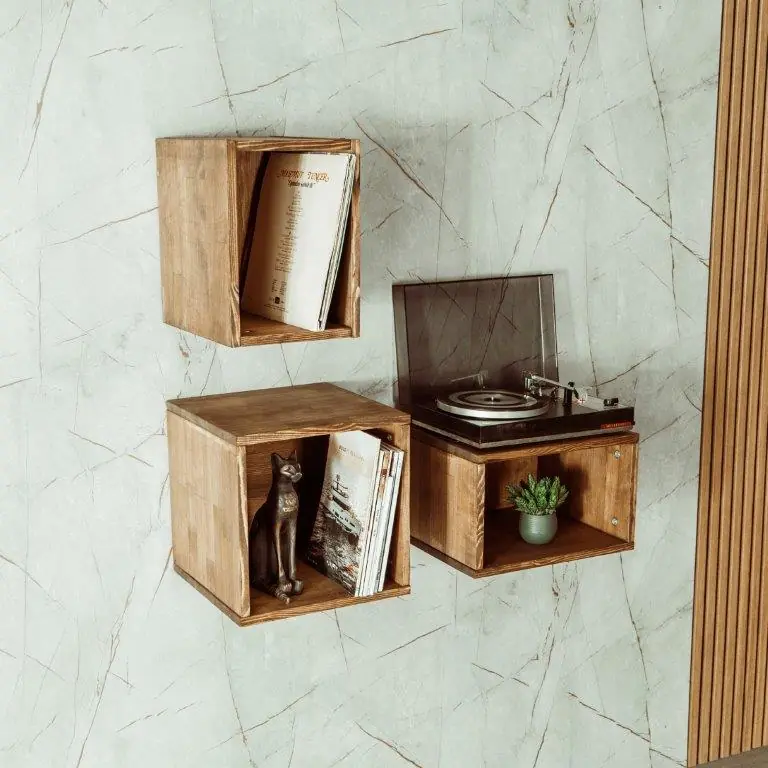
Store records on their edges, not in flat stacks — it's better for the records and far more space-efficient. A stand with an upright slot or open shelf keeps your most-played albums within reach without spreading across the room. For the rest of the collection, wall-mounted shelving above or beside your setup turns empty vertical wall into storage you didn't know you had. The goal is simple: keep the floor clear, and let the walls do the heavy lifting.
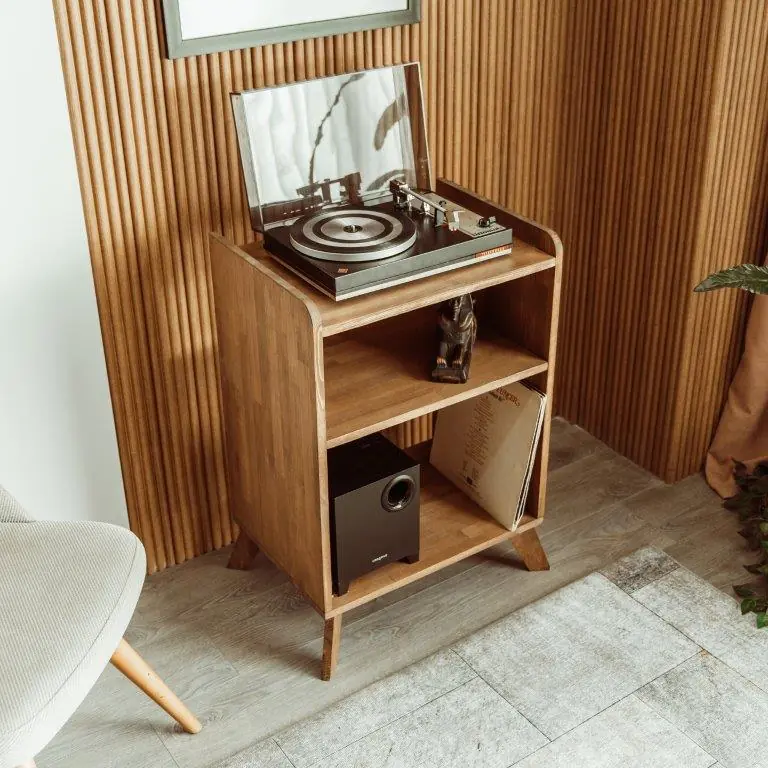
A compact stand with built-in storage, like the Turul record player stand, handles the daily rotation, while shelves overhead hold the deeper crates.
Keep the Palette Calm and the Lines Clean
Small rooms feel bigger when there's less visual noise. A few quiet choices make a real difference:
- Stick to natural, warm wood tones. Solid pine's light, consistent grain reflects more light than dark or heavily patterned finishes, which makes a corner feel airier.
- Limit the number of materials. When your stand, shelving, and accents share a wood-and-black-metal language, the eye reads the setup as one calm unit instead of a cluttered pile of separate objects.
- Leave breathing room. Resist the urge to fill every surface. A turntable, a small plant, and a record leaning against the wall says "curated." Ten things crammed on a shelf says "storage."
Tame the Cables and the Clutter
Nothing makes a small setup feel chaotic faster than visible cables. In a tight space they're right at eye level, so it's worth ten minutes to hide them.
Route your power and speaker cables down a back leg and tuck the excess behind the stand or into the lower bay. Choose a stand with an enclosed or recessed lower shelf so a subwoofer or amp sits out of the main sightline. The less hardware your eye has to process, the bigger and calmer the whole corner feels.
A Simple Layout That Works in Almost Any Apartment
If you want a starting point, this arrangement fits most small rooms:
- Pick the corner — ideally near a power outlet, away from the main walkway.
- Place a compact, leg-raised stand so the floor stays visible underneath.
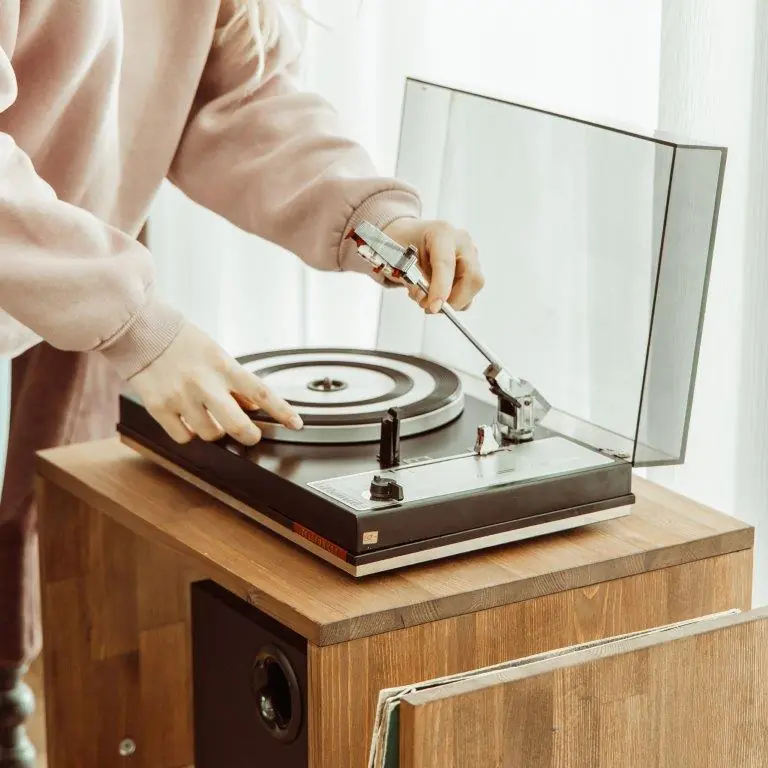
- Turntable on top, daily records in the upright slot, speaker in the lower bay.
- Add one shelf above for overflow storage and a little display space.
- Hide the cables, add one plant, and stop there. Restraint is what makes it look designed.
That's it. No extra room required — just a corner, the right piece, and a little discipline about what you leave out.
Final Thoughts
A small space isn't a reason to skip vinyl — it's a reason to be smart about it. Choose furniture that goes up instead of out, lift it off the floor, use your corners and walls, and keep the whole setup calm and clutter-free. Done right, a tiny corner can become the best-sounding, best-looking spot in your home.
Ready to build yours? Explore compact, apartment-friendly designs in the Oshoom record player stand collection and find the piece that fits your space — and your sound.






© 2026 OSHOOM. All rights reserved.