

In a world of instant streaming and endless playlists, vinyl records have done something remarkable: they've come back, and they're thriving. Sales have grown year after year, record stores are reopening, and a new generation is discovering what their parents and grandparents already knew — there's something special about listening to music on vinyl.
But if you're new to it, vinyl can feel intimidating. What do all the numbers mean? Why does it sound different? How do you start a collection without making expensive mistakes? This guide answers all of it. Whether you're spinning your first record or deepening a lifelong passion, here's everything you need to know about vinyl.
Why Vinyl Records Still Matter
Vinyl offers something digital simply can't replicate: a physical, tactile, deliberate way of experiencing music. You hold the album in your hands, study the artwork, place the record on the platter, and lower the needle. Listening becomes an event rather than background noise.
There's also the sound — warm, full, and natural in a way that many listeners find more emotionally engaging than digital. And there's the ownership: a record collection is personal, visible, and lasting in a way that a streaming library never quite feels.
For millions of people, vinyl isn't nostalgia. It's a richer way to love music.
A Brief History of Vinyl Records
Vinyl records became the dominant music format in the mid-20th century and ruled for decades. The 12-inch LP, introduced in 1948, allowed full albums on a single disc and shaped how we think about music to this day.
Even after CDs arrived in the 1980s and digital formats took over in the 2000s, vinyl never fully disappeared. It survived as a symbol of authenticity and sound quality — and over the past fifteen years, it's surged back into the mainstream. Today's vinyl revival reflects a renewed appreciation for analog audio and intentional, focused listening.
Understanding Vinyl Record Formats
Vinyl comes in a few common formats, each defined by size and playback speed:
- 12-inch LPs (33⅓ RPM) — the classic full-length album format, the heart of most collections
- 7-inch singles (45 RPM) — individual tracks or short EPs, often with a hit on each side
- 10-inch records — less common, historically used for special releases and certain genres
You'll see records described by both their size and their RPM (revolutions per minute), which tells your turntable how fast to spin. Most modern turntables handle both 33 and 45 speeds easily.
Why Vinyl Sounds Different
Here's the science behind the warmth. Vinyl is an analog format — the grooves physically capture continuous sound waves, an unbroken representation of the original recording. Digital audio, by contrast, samples that sound thousands of times per second and reconstructs it.
For many listeners, the analog signal feels more natural, more spacious, and more "alive." Vinyl can also include subtle imperfections — a faint warmth, a gentle character — that fans consider part of its charm rather than a flaw. It's not about technical perfection; it's about how the music feels.
Starting a Vinyl Collection
Building a collection is a personal journey, and there's no single right way to do it. Some people chase rare pressings and first editions; others simply buy the albums they love. Both are valid.
A few tips for beginners:
- Start with what you love — collecting is most rewarding when it reflects your real taste, not trends
- Buy from a mix of sources — new releases from shops, used gems from record stores and markets
- Inspect used records — check for deep scratches and warping before buying
- Don't rush — a thoughtful collection grows naturally over time
The best collection is one that tells your story.
Caring for Your Vinyl Records
Records are durable, but they reward a little care with years of great sound:
- Handle by the edges — fingerprints and oils degrade sound and attract dust
- Clean regularly — use a proper record brush and cleaning solution designed for vinyl
- Use inner and outer sleeves — they protect against dust, scratches, and wear
- Keep them out of heat and sunlight — both cause warping that ruins playback
A few good habits will keep your collection sounding its best for decades.
Proper Vinyl Storage
How you store your records matters just as much as how you handle them.
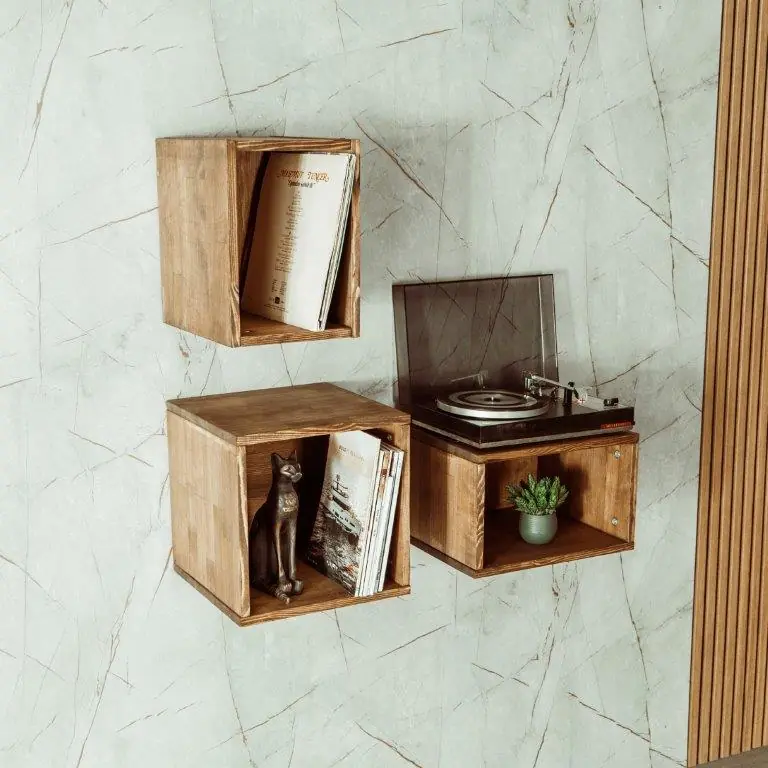
The golden rule: store records vertically, never stacked flat. Stacking puts pressure on the discs and causes warping over time. Keep them upright, snug but not crushed, away from heat sources and direct sunlight.
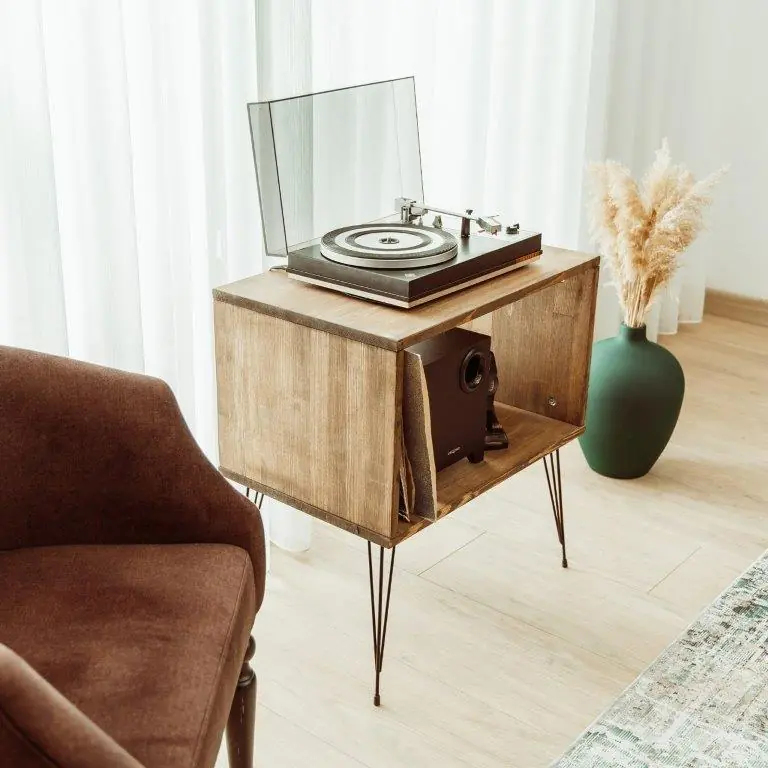
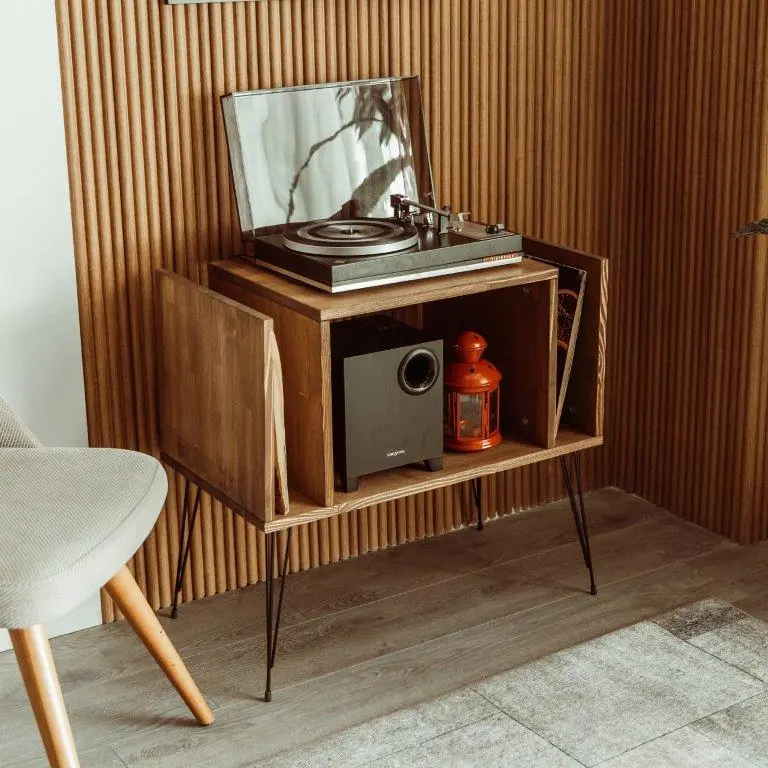
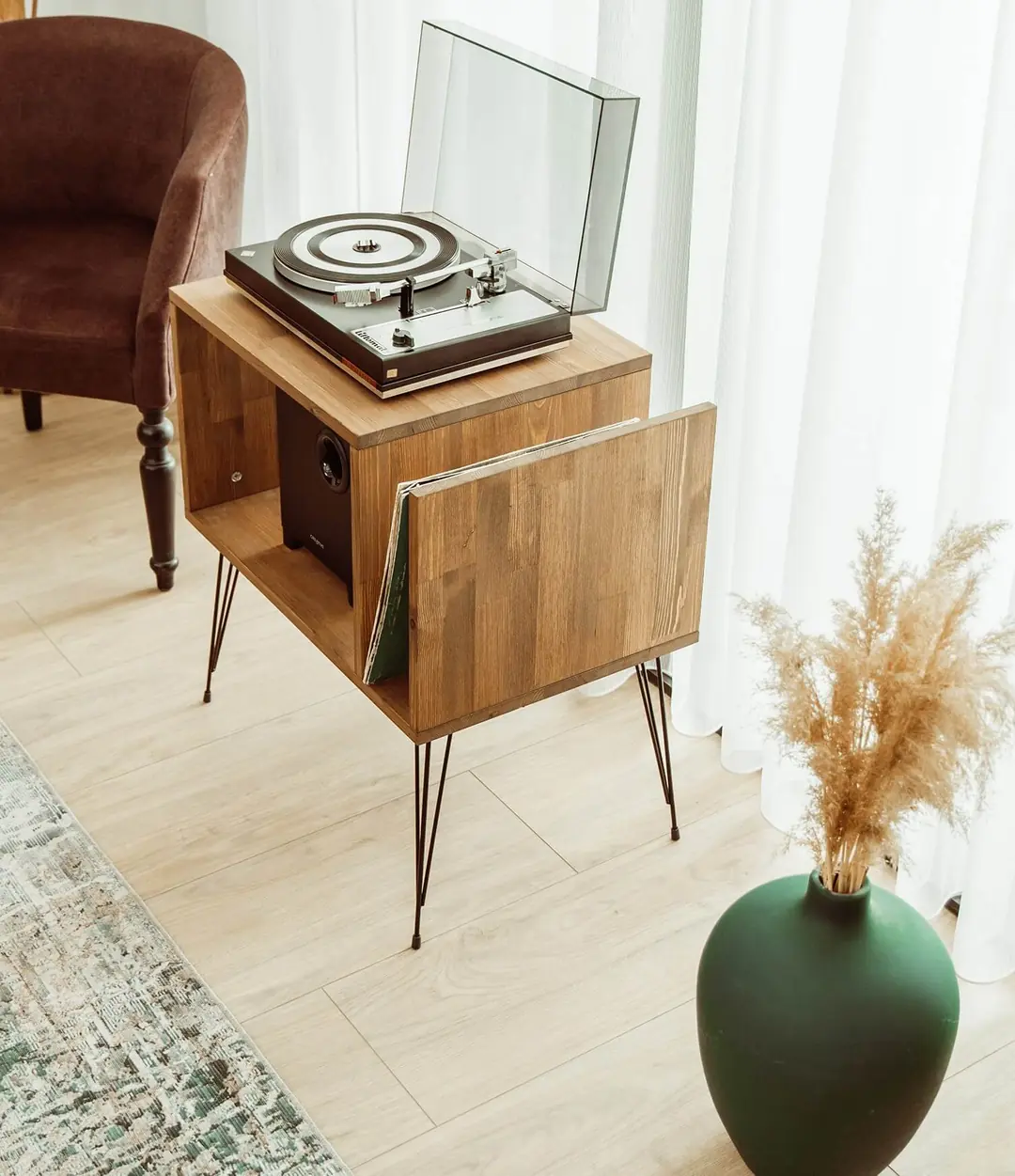
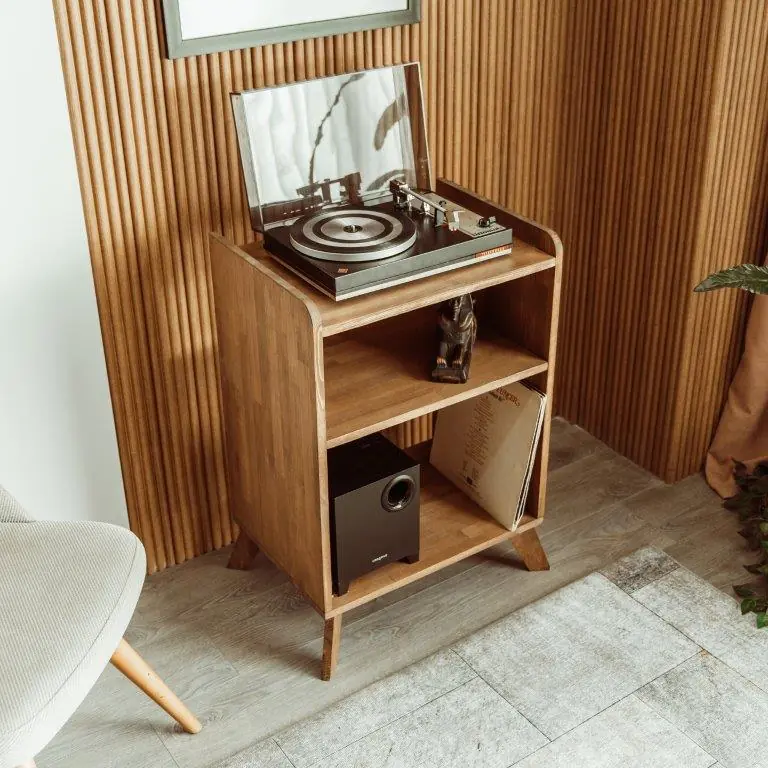
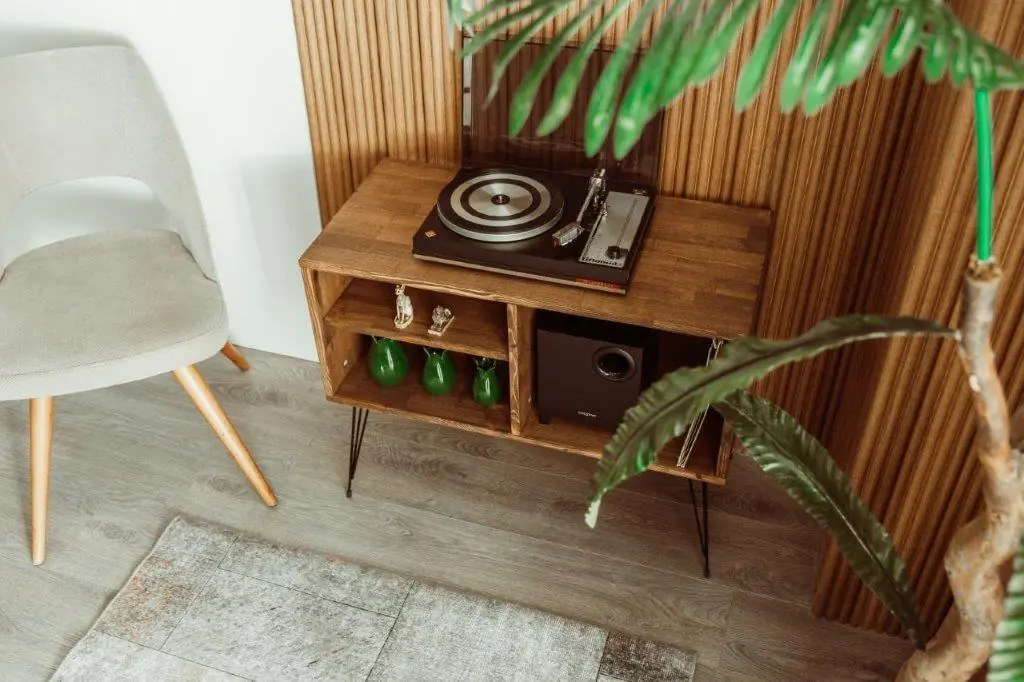
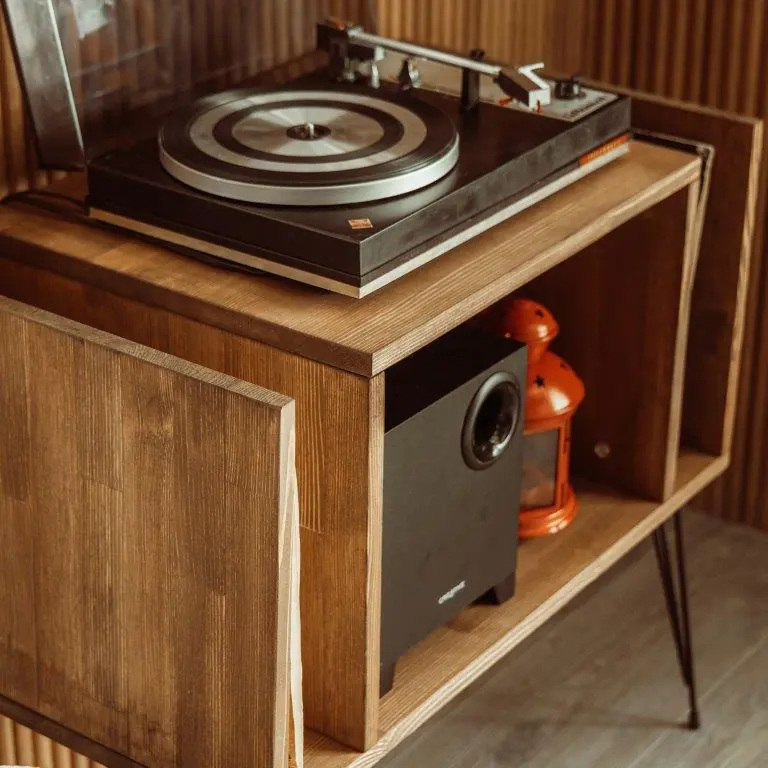
This is where good furniture earns its place. A dedicated record player stand with proper storage keeps your collection upright, organized, and within easy reach — while giving your turntable a stable home. A key detail: storage shelves should be at least 13 inches deep to fit a 12-inch LP in its sleeve without bending.
At Oshoom, every stand is handmade from solid pine wood and built with vinyl storage in mind. The Simurgh Record Player Stand With Storage and the Tengu MCM Record Player Stand With Storage both offer generous, properly-sized storage so your collection stays protected as it grows. For smaller spaces, the Griffin Record Player Stand & Cabinet keeps your records organized in a compact footprint.
Proper storage isn't just practical — it protects an investment that often grows more valuable, and more meaningful, over time.
The Ritual of Listening to Vinyl
One of vinyl's greatest pleasures is the ritual itself. You choose a record deliberately. You slide it from the sleeve, place it on the platter, and lower the needle. You commit to an album, side by side, the way the artist intended — rather than skipping through a playlist.
This slower, more mindful way of listening is exactly what so many people are rediscovering. In a fast, distracted world, vinyl asks you to slow down and pay attention. And that, more than anything, is why it endures.
Vinyl for Beginners vs. Enthusiasts
Wherever you are on the journey, there's room to grow:
- Beginners enjoy discovering albums, building a foundational collection, and learning the basics of care and setup
- Enthusiasts dig into rare pressings, equipment upgrades, acoustics, and the finer points of sound quality
The beauty of vinyl is that it welcomes you at any level — and there's always more to explore.
Final Thoughts
Vinyl records continue to captivate listeners because they offer something timeless: authentic sound, physical artwork, and a meaningful, intentional connection to music. Whether you're spinning your first LP or expanding a lifelong collection, vinyl rewards you with an experience streaming can't match.
And once you've started collecting, give your records — and your turntable — the home they deserve. Explore the full Record Player Stand collection and build a setup as lasting as the music you love.






© 2026 OSHOOM. All rights reserved.